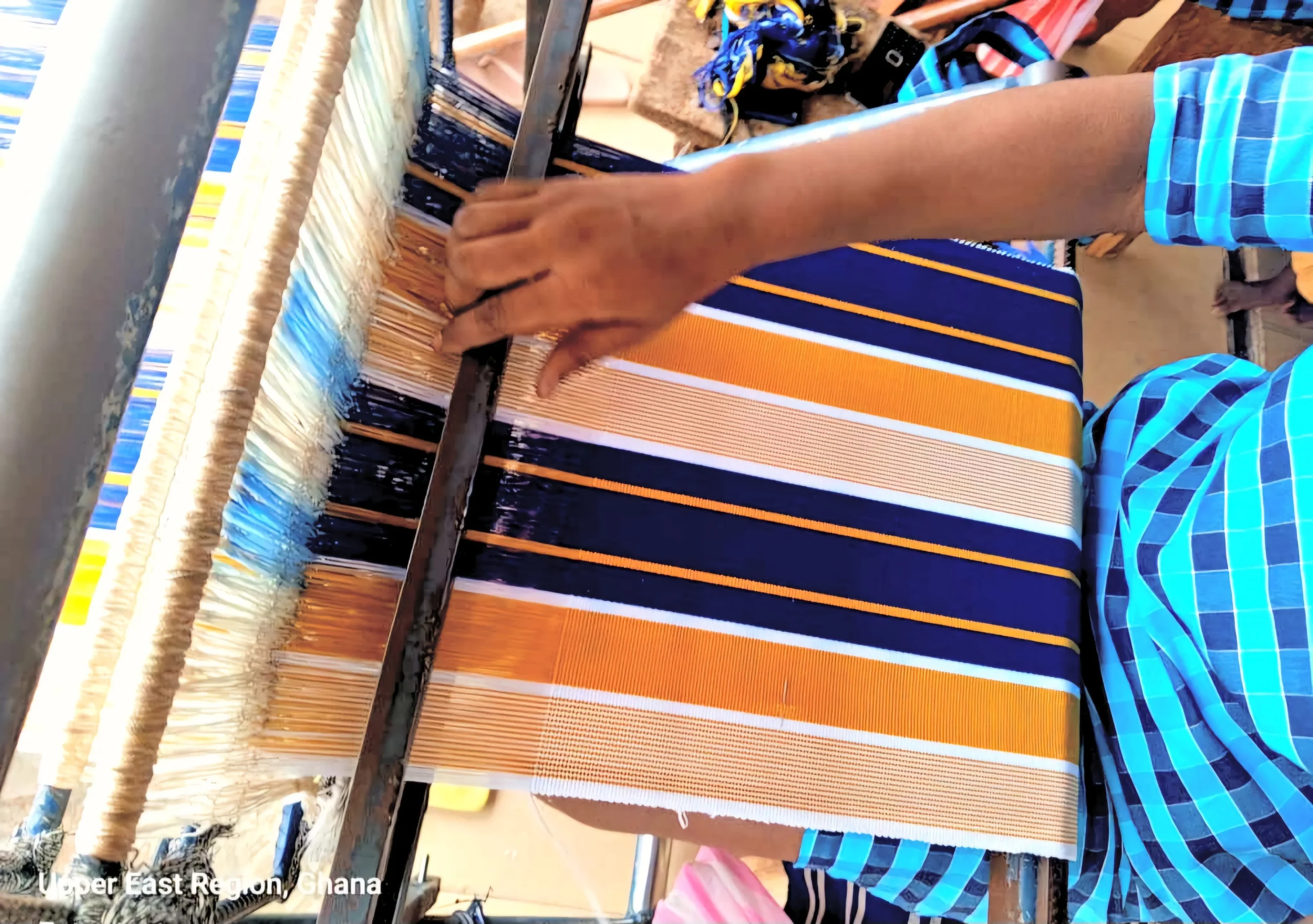
Deep in the savannah landscapes of northern Ghana, where communities like Daboya, Yendi, Bolgatanga, and Tamale thrive, the art of fugu weaving has been a cornerstone of cultural expression for centuries. This traditional craft, producing the iconic striped smock known as fugu, batakari, or tani, blends functionality with symbolism, creating garments that protect against the elements while embodying heritage and identity. Passed down through generations, the techniques involve meticulous handwork, from spinning raw cotton to assembling vibrant strips into flowing tunics. Let’s delve into the step-by-step process, exploring the tools, materials, and cultural nuances that make fugu weaving a living tradition.
Historical Roots: From Migration to Mastery
The origins of fugu weaving trace back to ancient migrations and trade routes across West Africa, influencing communities in Ghana, Burkina Faso, and beyond. In places like Daboya, the craft is linked to ancestors from Mende (modern Mali) and Hausa traders from Nigeria, who introduced indigo dyeing methods alongside Islam. Yendi’s traditions stem from Mossi migrants from Burkina Faso, where weaving became intertwined with chieftaincy and spiritual beliefs. Initially practical for shielding against harsh weather—intense heat or dusty harmattan winds—the smock evolved into a symbol of status, worn by warriors, chiefs, and during ceremonies. During Ghana’s independence era, leaders like Kwame Nkrumah donned fugu to assert cultural pride, transforming it into a national emblem of resistance and unity. Today, while modernization introduces synthetic yarns and mechanical elements, the core techniques remain handmade, preserving ancestral knowledge.
Materials: The Foundation of Durability and Color
At the heart of fugu weaving is cotton, historically sourced from local farms in northern Ghana. Artisans prefer hand-spun threads for their strength and weight, though factory-spun yarns (like rayon or polyester cones) are increasingly used due to declining local cotton production. Dyes play a crucial role, with natural sources like indigo leaves, tree bark, and earth pigments creating vibrant hues—white for purity, blue for strength, and black for resilience. In Daboya, synthetic indigo from Burkina Faso supplements traditional methods to achieve intense colors, while Yendi incorporates plant ashes for colorfastness. To enhance the smock’s heaviness—a prized quality for protection and prestige—weavers double the yarns during warp and weft preparation.
Women often handle the initial spinning, cleaning the cotton, combing it, and twisting it into threads using simple spindles. This division of labor underscores the communal nature of the craft, where skills are hereditary, with fathers teaching sons from a young age.
The Dyeing Process: Infusing Life into Threads
Before weaving begins, yarns are dyed to create the signature patterns. In Daboya, this occurs in deep pits (8-12 feet) lined with special clay called dzata, mixed with ash and indigo leaves. The mixture ferments for days, turning greenish with froth indicating readiness. Hanks of yarn are soaked for up to three days, sometimes with catalysts like baba for sheen, and resisted with rubber bands for intricate designs. After soaking, threads are dried in the sun, oxidizing to reveal deep blues.
Yendi employs half-buried pots, burning plants like galango for ashes that enhance dye adhesion. This method allows for a broader palette, though traditional dyes may fade over time. Taboos surround the process—such as avoiding crossing warps or dipping into another’s dye—to maintain purity and avoid misfortune.
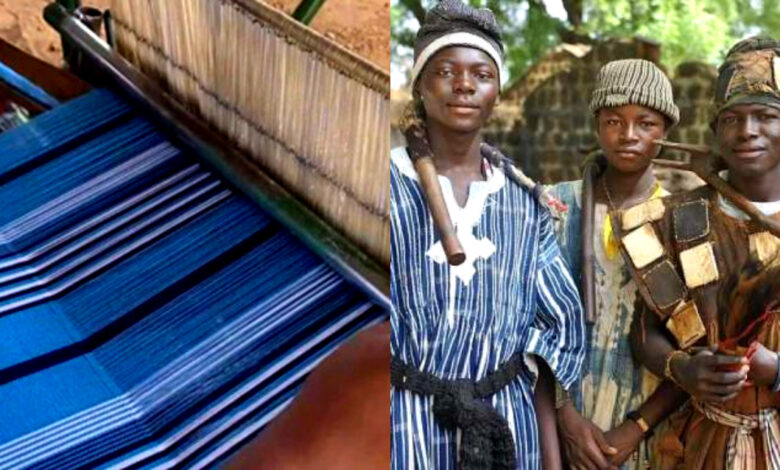
Origin Of Fugu: Ghana’s Traditional Cloth That Symbolises Identity And Resistance – The Afri Post
Crafting the Strips
The core technique involves narrow-strip looms, operated primarily by men. These horizontal looms consist of wooden frames pegged into the ground, with warp rollers, heddles suspended from cords, and reed beaters. In Daboya, traditional looms use 10 wooden pieces, while modernized versions incorporate upright posts inspired by southern kente styles. Yendi sticks to simpler designs with pawl-ratchet mechanisms for tension control.
Warp threads are stretched on pegs, arranged in patterns like 8 white to 4 blue for striped effects. Weavers interlace weft yarns using a shuttle, beating each row tightly to form durable strips—typically 3-5 inches wide for indigenous pieces, up to 12 inches for contemporary ones. This labor-intensive step can take days, with patterns symbolizing events, clans, or philosophies, such as guinea fowl motifs or “cover our secret.”

Bringing the Smock to Life
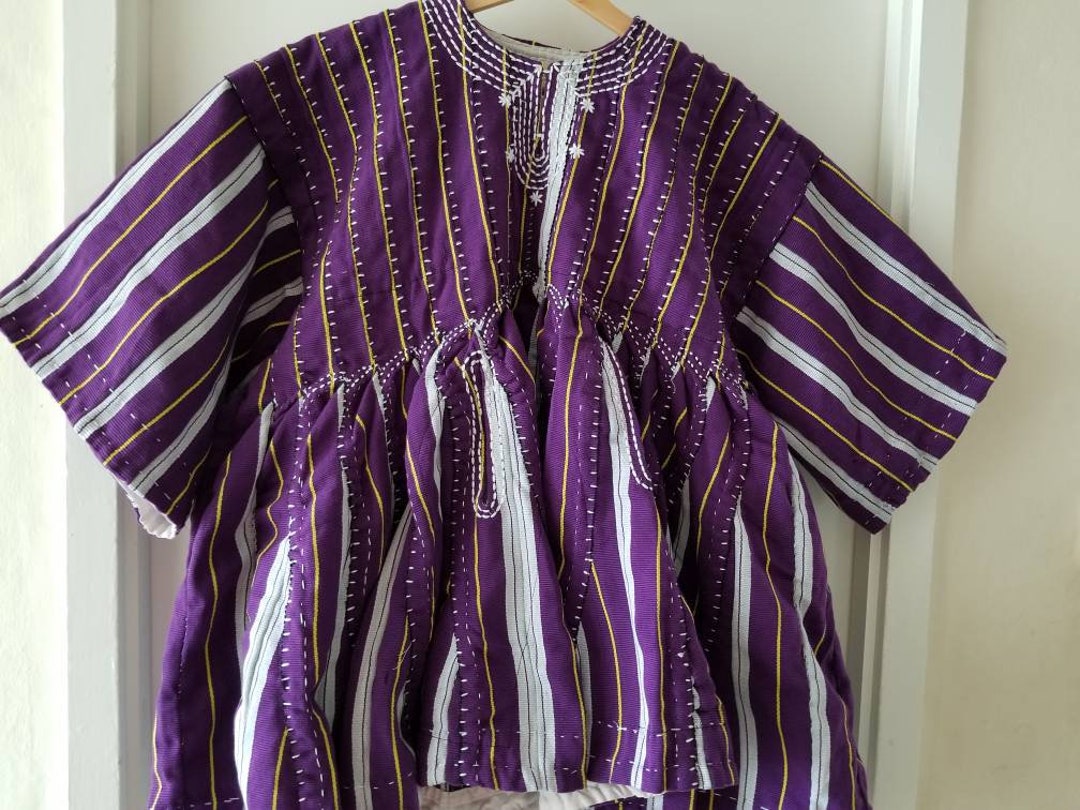
Once woven, strips are stitched together by hand or machine, forming the poncho-like structure with wedge-shaped godets for flare and movement—ideal for dances or daily tasks. Embroidery adorns the neckline and chest, adding symbolic details for status or ceremonies. Variations include sleeveless dansika for everyday wear, wide-sleeved kpaakuto for chiefs, or colorful adaptations for women and children.

Weaving Community Ties
Beyond technique, fugu weaving fosters economic empowerment, supporting families through sales at markets, festivals, or online platforms. Challenges like yarn scarcity and climate impacts persist, but initiatives like smock festivals and government programs aim to sustain the craft. In an evolving world, fugu techniques adapt—blending with modern fabrics—yet retain their essence, reminding us that each smock is a tapestry of history, skill, and shared stories. As artisans continue this rhythmic dance of threads, the fugu remains a vibrant link to Ghana’s past and a beacon for its future.