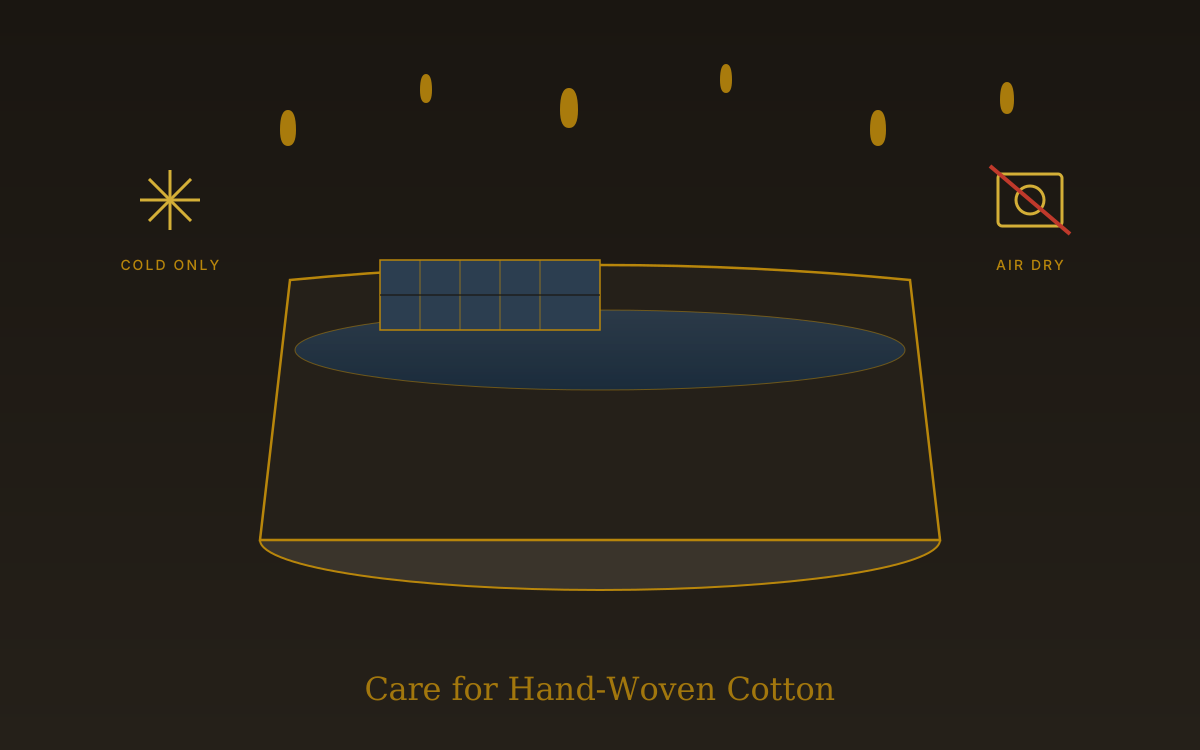
Why hand-loomed cotton is different
A hand-woven fugu smock is not the same fabric as a mass-produced t-shirt. It is built from narrow strips of cotton stitched together by hand, with weaves that contain natural irregularity and structure designed to soften beautifully over time. That same structure is what makes the wrong washing routine so destructive.
The two failure modes you must avoid:
- Strip-seam stress. The vertical seams joining the woven strips are stitched, not bonded. Wringing, scrubbing, or aggressive machine cycles can pull these apart.
- Shrinkage and fade. Hot water and tumble drying compress the cotton fibres and accelerate dye loss. A 5–10% shrink on the first wash is common when smocks are mistreated.
Get the basics right and your smock will outlive every fast-fashion piece in your closet.
How to wash a fugu smock (8 steps)
The single most important rule: hand-wash in cold water. Everything below is a refinement of that.
- Pre-test for colour fastness. Especially for indigo, dark blue, or hand-dyed pieces. Dampen a hidden corner; press white cloth; check for transfer.
- Fill a basin with cold water. 15–20°C. Never warm or hot.
- Add mild detergent. One teaspoon per litre of cold water. Liquid only. No bleach, no enzymes, no fabric softener.
- Submerge and gently agitate. Move the smock through the water for 3–5 minutes. Never twist, scrub, or wring.
- Soak briefly. 10–15 minutes maximum. Longer risks bleed.
- Rinse thoroughly. Drain, refill with cold water, gently press water through. Repeat until rinse water runs clear.
- Press — do not wring. Lay flat on a clean towel, roll up tightly, press to absorb water.
- Air-dry flat. Lay on a dry towel, reshape, leave away from direct sun.
How to dry without distortion
How you dry a fugu matters as much as how you wash it.
Best: lay flat on a fresh dry towel, indoors, away from direct sunlight, with the smock reshaped to its original rectangular dimensions. Direct sun fades dyes; tumble dryers shrink cotton; hanging on a thin wire hanger stretches shoulders. Flat drying solves all three.
Acceptable: hang on a wide padded hanger or a clean wooden hanger in a shaded indoor space. Make sure the smock's weight is supported by the full shoulder line, not pinched.
Never: tumble dryer (any cycle), direct sun for hours, hot radiator, or thin wire hanger.
Make your smock the centrepiece of the wardrobe
Discover hand-loomed Gh Pro Fugu pieces designed to age gracefully for decades.
Shop the CollectionHow to iron without damage
You can iron a fugu smock — in fact, a properly pressed smock looks dramatically more polished. Just do it carefully.
- Set iron to the cotton setting (medium-high, around 200°C).
- Turn the smock inside out.
- Place a clean, slightly damp cotton pressing cloth between the iron and the smock.
- Press in long smooth strokes along the strip seams — never circular motions.
- Avoid embroidery. Press around it, not over it.
- For stubborn creases, lightly mist with a water spray bottle and re-press.
How to store between wears
Storage is the silent killer of beautiful textiles. Here is how the master weavers do it:
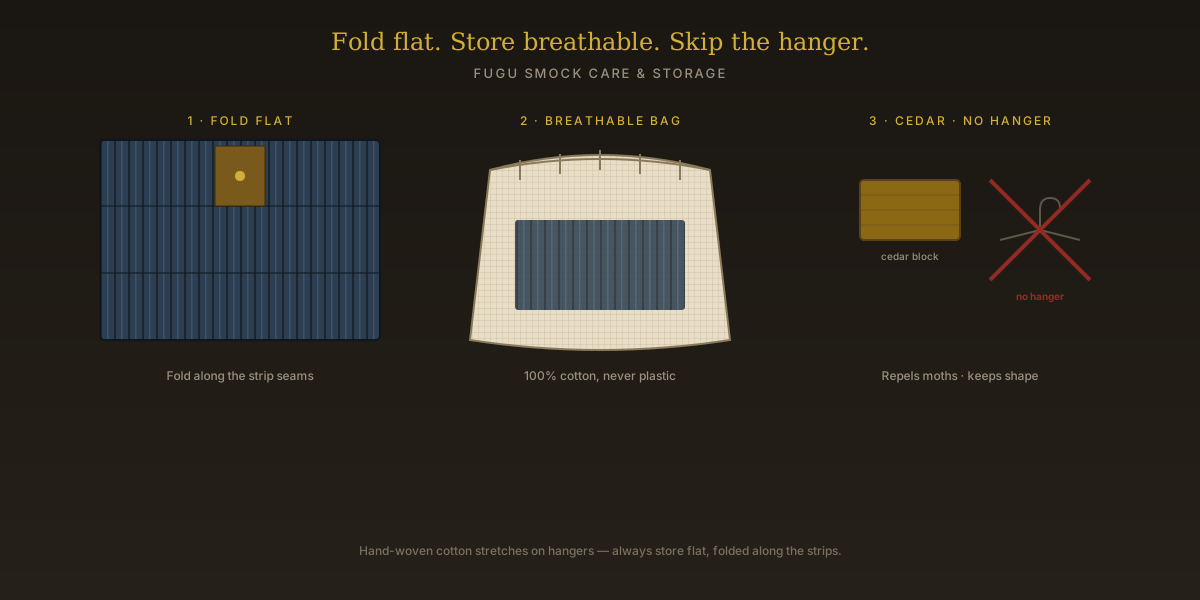
- Fold along the strip seams, not against them. The strip joins are stronger than perpendicular folds and resist crease memory.
- Use a cotton or linen storage bag, never plastic. Cotton needs to breathe; plastic traps moisture and encourages mildew.
- Pad shoulders if hanging. A wide padded hanger preserves the natural shoulder shape. Wire hangers create permanent dimples.
- Keep cool, dry, dark. Ideal storage is below 22°C, low humidity, no direct light. A standard wardrobe shelf is fine.
- Use cedar blocks, not mothballs. Mothballs leave a chemical odour cotton clings to. Cedar protects naturally.
Spot-cleaning common stains
Most marks on a fugu can be handled without a full wash.
- Food/oil stains. Blot (do not rub) immediately with a clean dry cloth. Apply a tiny drop of mild dishwashing liquid diluted in cold water with a soft cloth, working from the outside of the stain inward. Rinse with cold water and air-dry.
- Drink spills (wine, coffee). Blot, then dab with cold water and a teaspoon of white vinegar. Avoid hot water — it sets the stain.
- Sweat marks. Spot-treat with a cold-water and white-vinegar rinse. If yellowing persists, a cold full-wash is the answer.
- Ink. Blot, then dab gently with rubbing alcohol on a cotton swab. Test on a hidden area first.
For any stubborn or sensitive stain — especially on Presidential Elite embroidered pieces — contact us before attempting heavy treatment. We can advise based on the specific dye and weave.
7 things to never do
- Never use bleach. It destroys natural cotton fibres and dyes.
- Never wring or twist. Strip seams will pull apart.
- Never tumble dry. Even on low heat. Air-dry only.
- Never hang in direct sunlight. Indigo and natural dyes fade visibly within hours of UV exposure.
- Never iron over embroidery. The threads can scorch or distort.
- Never store in plastic. Trapped moisture leads to mildew and yellowing.
- Never dry-clean unless it's a specialty cleaner. Standard PERC dry-cleaning chemicals can compromise hand-dyed pieces.
Get the routine right and a hand-woven fugu smock outlasts almost anything else in a wardrobe. Shop hand-woven fugu smocks if you are choosing your next one.
Frequently asked questions
Can I machine-wash a fugu smock?
We strongly advise against it. If you must, use a delicates bag, cold water, gentle cycle, and no spin cycle. Air-dry flat afterwards.
How often should I wash my fugu?
Spot-clean as needed. Full wash only every 5–10 wears or when visibly soiled. Hand-woven cotton breathes well and resists odours.
Will my fugu smock shrink?
With cold-water hand-washing and flat air-drying, shrinkage is minimal (1–2% on the first wash). Hot water or tumble drying can cause 5–10% shrinkage.
Can I iron a fugu smock?
Yes — on the cotton setting with a damp pressing cloth, ideally on the reverse side. Avoid ironing directly over embroidery.
How should I store my fugu smock?
Fold loosely along strip seams and store flat in a cotton bag, or hang on a wide padded hanger in a cool, dark, dry space.
What if my smock fades or shrinks despite proper care?
Reach out to us at our contact page. We stand behind every Gh Pro Fugu piece — and our weavers can advise on restoration where possible.