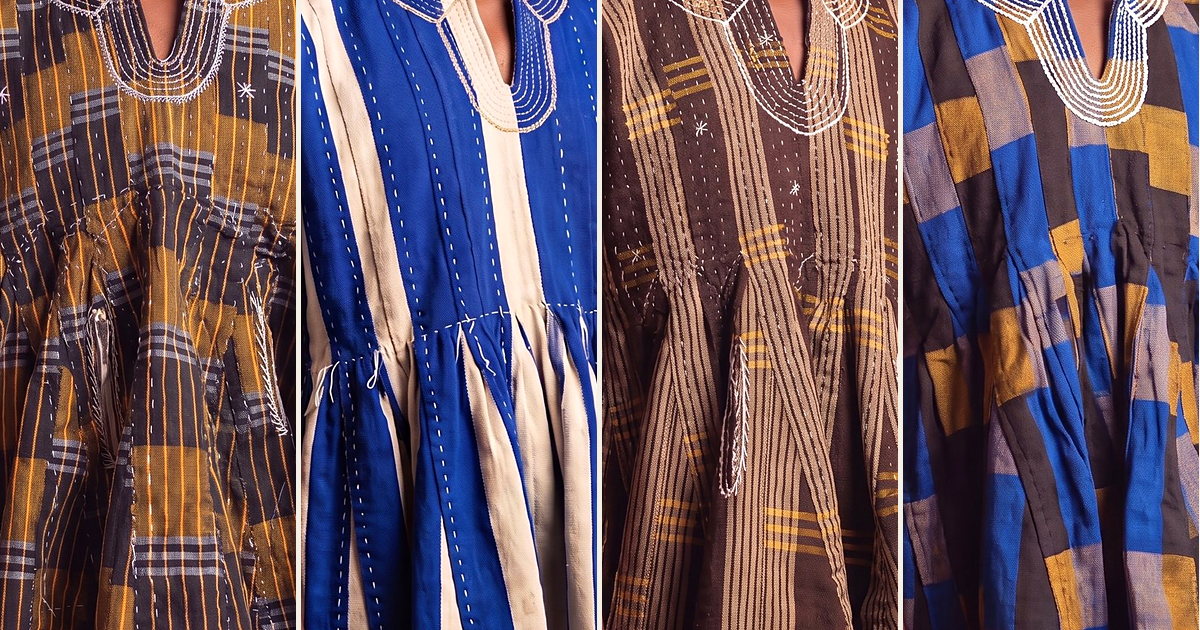
Types of Ghanaian Smock: Batakari Patterns Explained
Sleeveless, sleeved, wide-sleeved and chiefly. The named types of Ghanaian smock, the northern words for them, and what the patterns actually mean.
Read the Guide →Everything here comes out of questions buyers actually ask us. Will it shrink. What do I wear underneath. Why does one smock cost $155 and another $250. Who wove it. Written in Ghana, for anyone who owns a fugu smock or is about to.
Sleeveless, sleeved, wide-sleeved and chiefly. The named types of Ghanaian smock, the northern words for them, and what the patterns actually mean.
Read the Guide →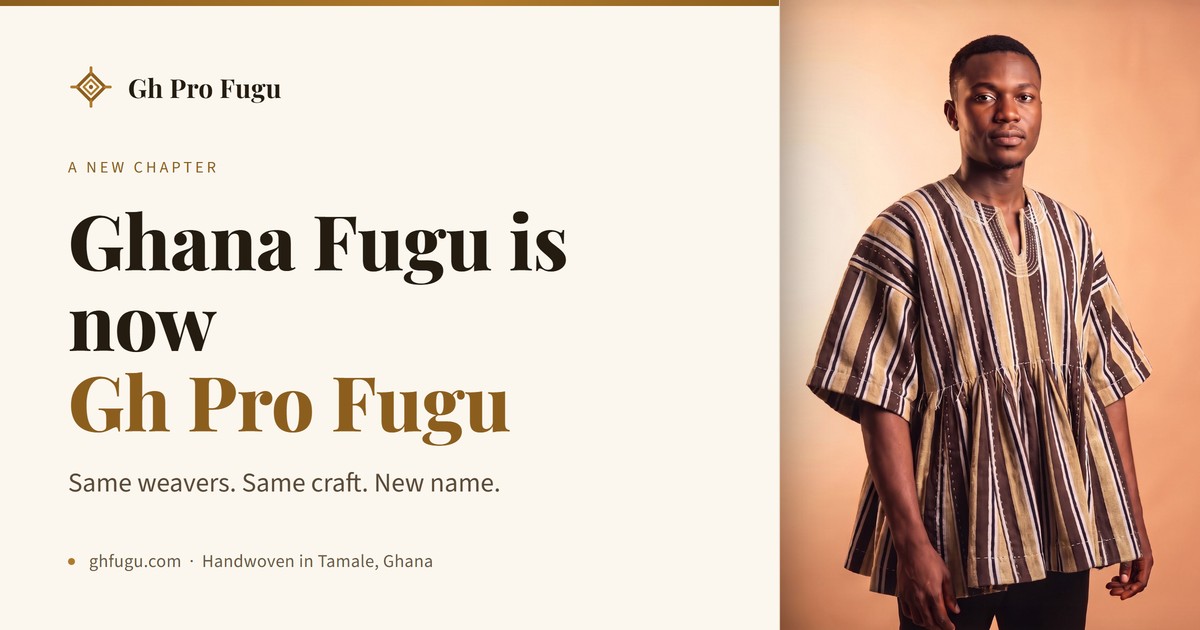
In July 2026, Ghana Fugu became Gh Pro Fugu. The name is new — the website, the weavers, and the cloth are not. Here is exactly what changed, and why.
Read the Announcement →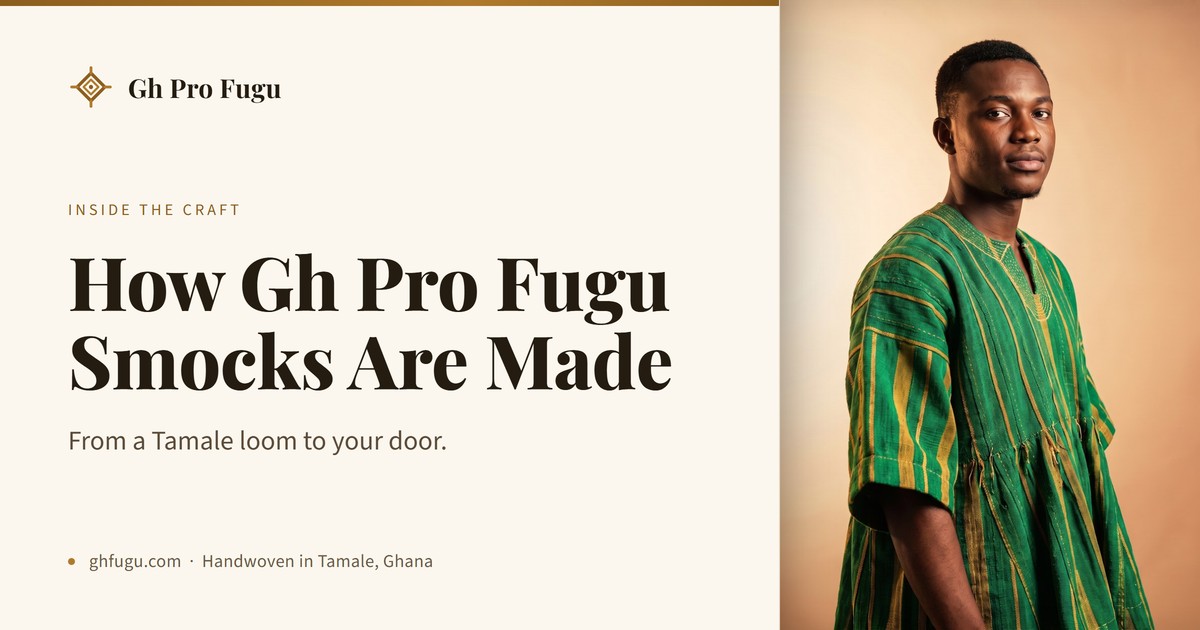
The narrow-strip loom, the towns that weave, how many strips make one garment, and why the top tier takes 21 days.
Read the Process →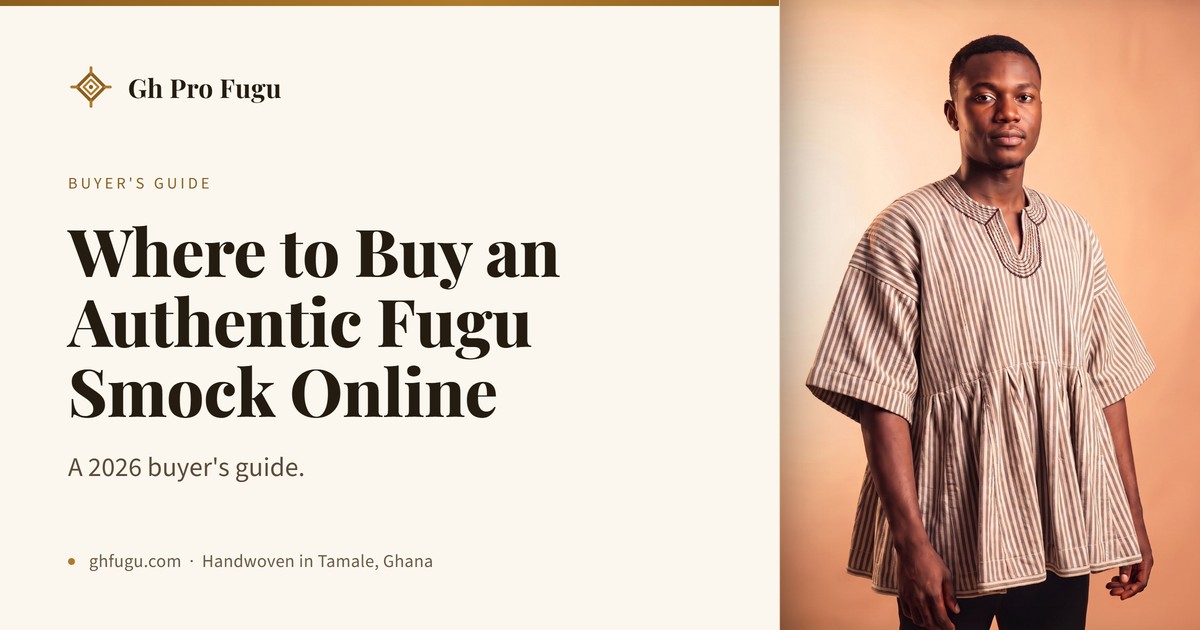
Direct, marketplace, or in Ghana's markets — an honest comparison, plus a 5-point checklist for spotting a real hand-woven batakari from a printed lookalike.
Read the Guide →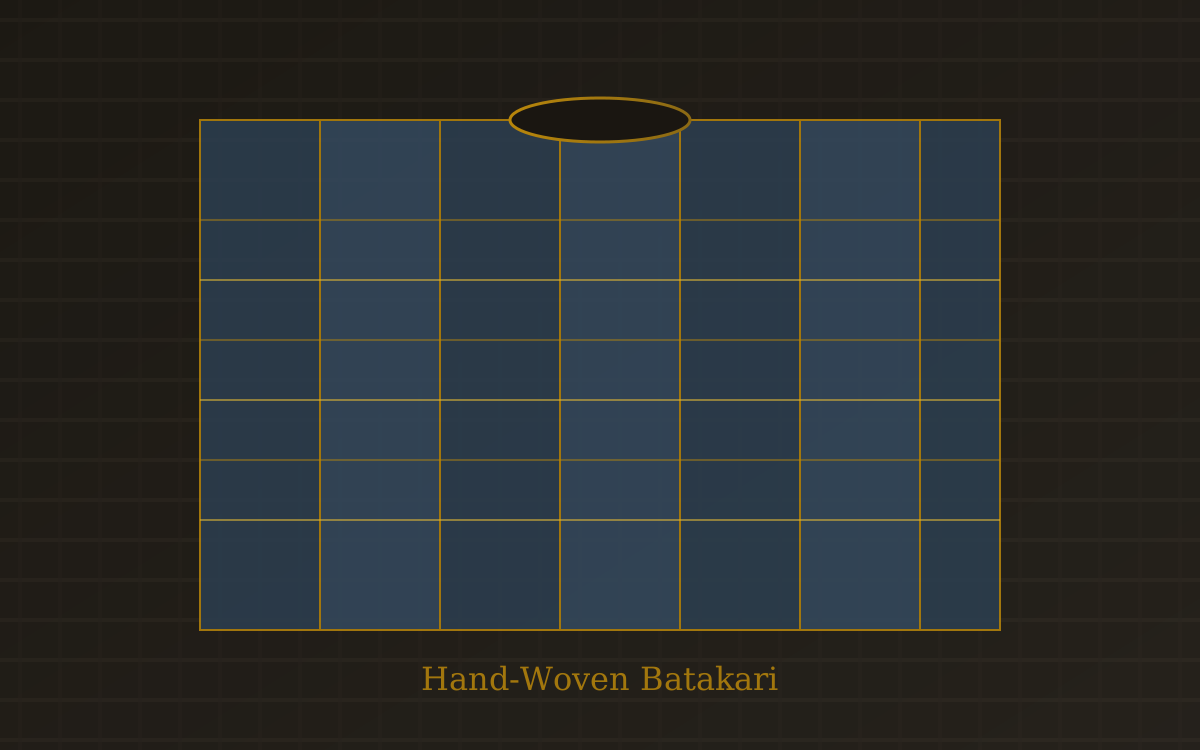
From the looms of Tamale to the closets of presidents and global icons, the fugu smock carries centuries of meaning. Here is everything you need to know about Ghana's most storied garment.
Read the Guide →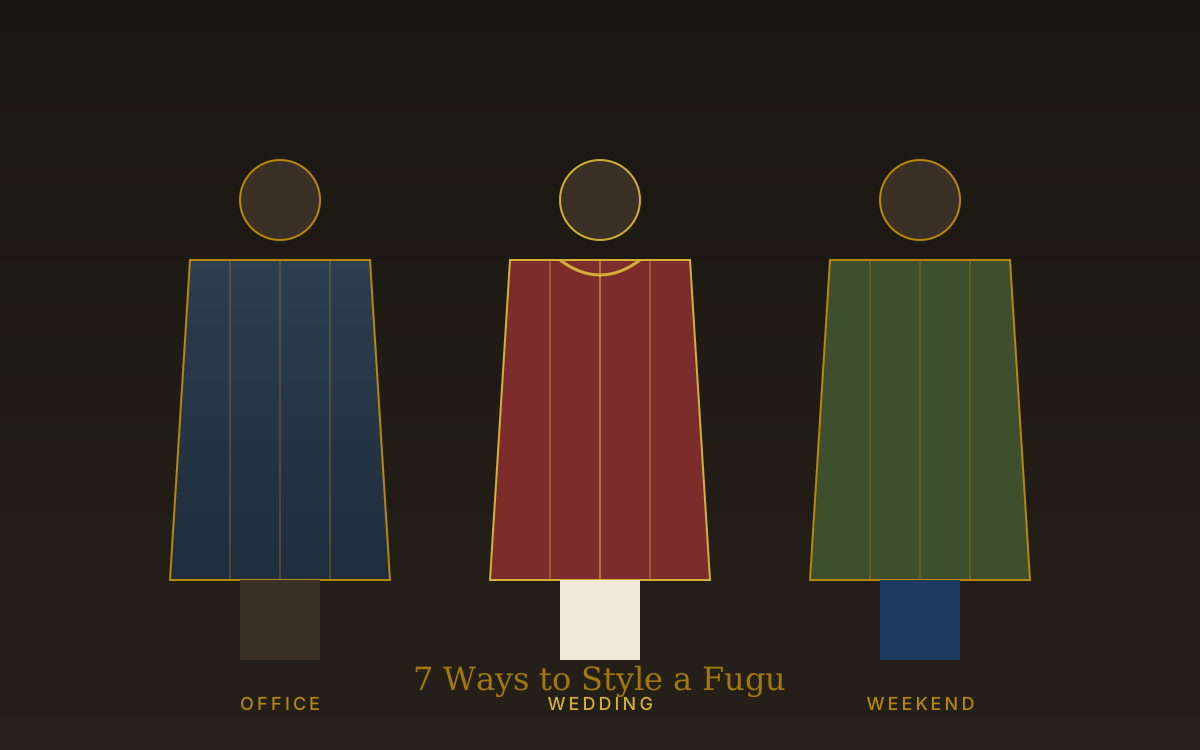
From smart-casual office days to weddings, festivals, and weekend brunches — seven ways to style your batakari that work in 2026 (and look effortless doing it).
Read the Style Guide →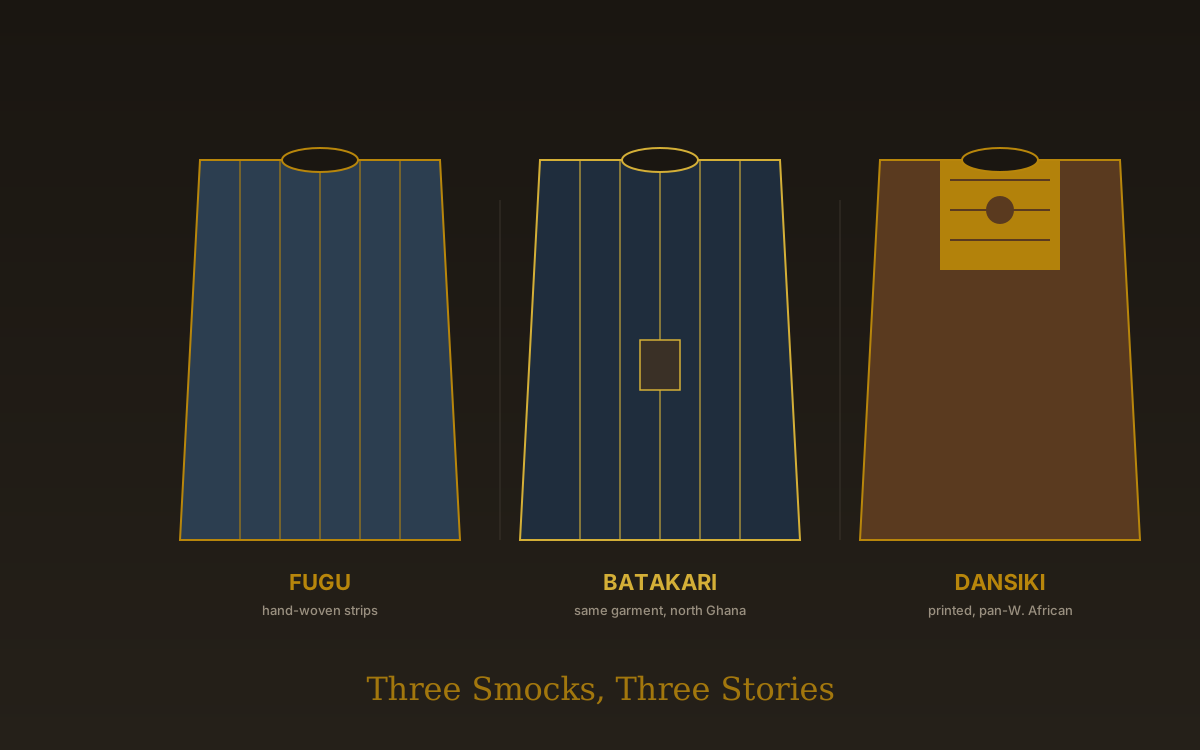
They look similar. They sound similar. Some people use the words interchangeably. But there are real distinctions — geographical, structural, and cultural — that matter when you're shopping.
Settle the Debate →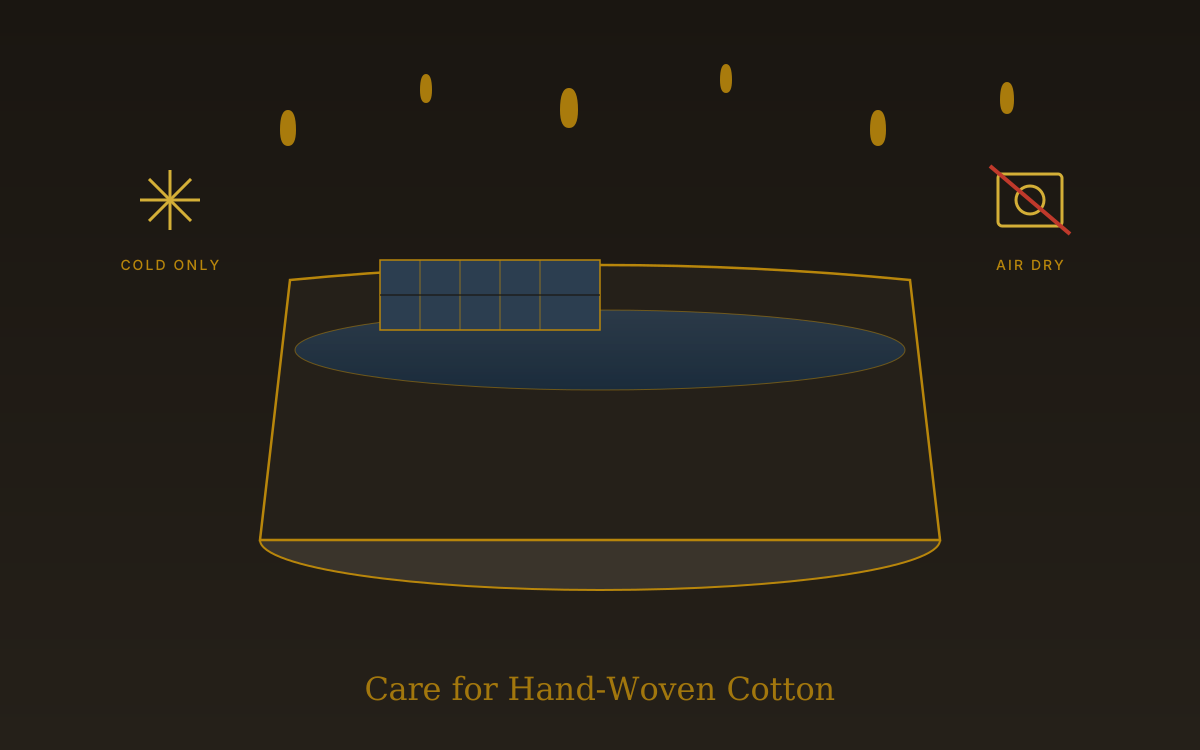
Hand-loomed cotton needs different care than your usual t-shirt. Here is the no-shrink, no-fade routine our weavers recommend — so your smock looks better at year five than year one.
Read the Care Guide →