What is a fugu smock?
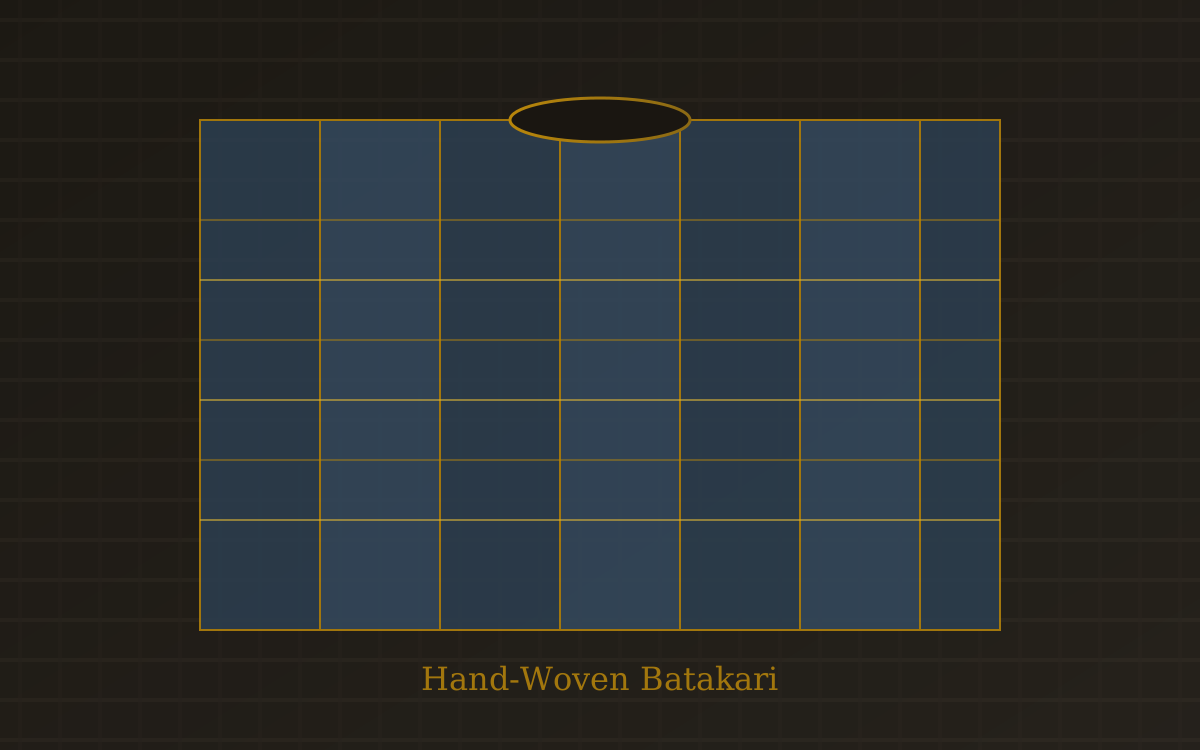
A fugu smock is a loose hand-woven cotton tunic from Northern Ghana, worn by men and women. Ghanaians also call it a batakari, and in English it is the Ghana smock. It is built from narrow strips of cotton woven on a hand loom, then stitched side by side, which is what gives the cloth its plaid look.
The strips are the reason a fugu looks the way it does. A weaver in Tamale or Bolgatanga works a loom that produces cloth roughly four inches wide, so a single smock takes a stack of strips sewn edge to edge by hand. Where the stripes meet, the check appears. Nobody prints it on. And the hem at the bottom is woven closed, not frayed, which is one of the fastest ways to tell a real one from an imitation.
If you have seen a head of state, an Afrobeats artist, or a member of the Ghanaian diaspora wearing what looks like a flowing tunic with horizontal stripes — that is almost certainly a fugu smock.
Where the fugu comes from
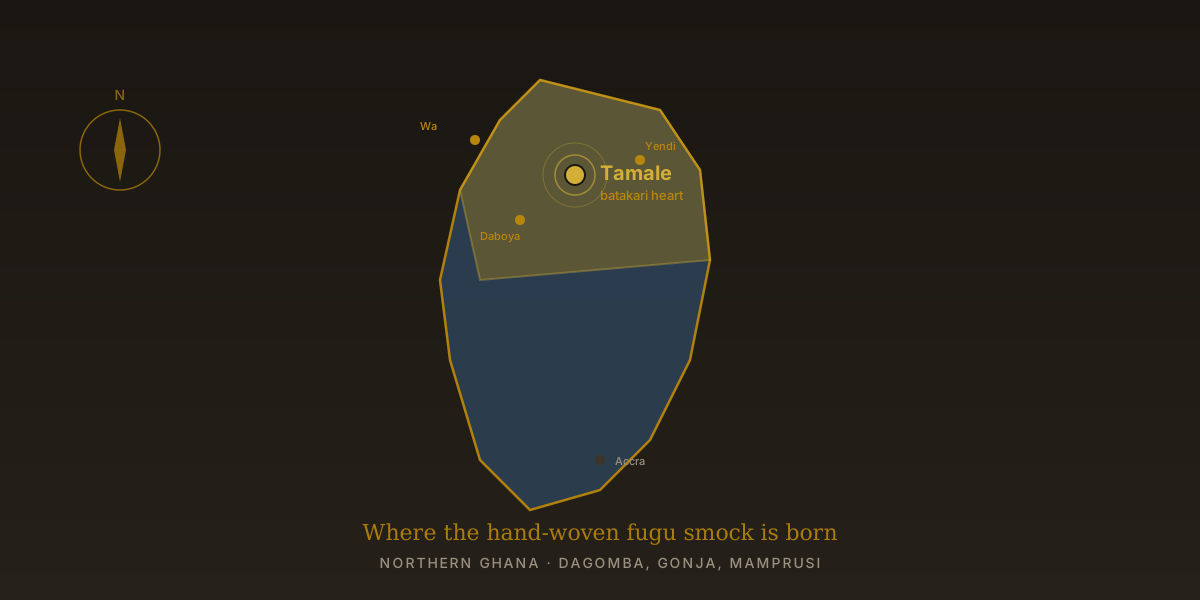
The smock is indigenous to the Mole-Dagbani-speaking peoples of Northern Ghana — principally the Dagomba, Gonja, Mamprusi, Nanumba, Wala, Frafra, and Sissala. The weaving tradition is centuries old, with documentary references in trans-Saharan trade records dating back to at least the 16th century. The smock travelled south along trade routes long before colonial borders existed, which is why it is now considered the de facto national garment of Ghana, despite originating in a specific cultural region.
Tamale, the regional capital of Ghana's Northern Region, remains the spiritual centre of fugu weaving. Walk through the markets of Aboabo or Daboya and you will hear the steady clack of shuttle looms — some operated by men whose grandfathers wove the very same patterns on the very same machines.
How a fugu is woven
Authentic fugu cloth is made from cotton spun and woven on a horizontal floor loom. The loom produces strips of fabric typically 4 to 6 inches wide — a deliberate constraint of the traditional weaving width. To make a single adult smock, the weaver produces a long continuous strip, then cuts it into segments and stitches the segments side-by-side to build a wider panel.
The process at a glance:
- Cotton preparation. Raw cotton is hand-ginned, carded, and spun into yarn. In the most traditional pieces, the yarn is undyed; in modern pieces, indigo, cola-nut, and synthetic dyes add colour.
- Loom warping. The weaver sets up the warp threads (running lengthwise) on the loom — a meticulous job that can take an entire day for a complex pattern.
- Weaving. Using foot pedals to lift alternate sets of warp threads, the weaver passes a shuttle of weft thread through the gap. Patterns emerge from rhythmic colour changes in the weft.
- Strip joining. Once enough strips are woven, they are aligned and hand-stitched together — the seams visible as a defining design feature.
- Cutting and finishing. The neckline and arm openings are cut, edges are reinforced, and a tailor adds optional embroidery around the neckline.
Total production time for a single smock: anywhere from three days to three weeks, depending on complexity, pattern, and embroidery. This is why every authentic fugu carries small irregularities — they are not flaws but the fingerprint of the weaver.
See the loom translate to the closet
Browse our hand-woven smocks — each one made-to-order by master weavers in Tamale, Northern Ghana.
Shop the CollectionWhat the fugu smock symbolises
To wear a fugu is to wear a statement — though the statement varies depending on who is wearing it and where.
- Authority. Chiefs and elders wear elaborate smocks at durbars and festivals to signal rank. The cut, the embroidery, and the layered amulets all telegraph status.
- Protection. Historically, warriors of the Dagbon, Gonja, and Mamprusi kingdoms wore battle smocks (sometimes called batakari kura) sewn with leather pouches containing Quranic verses or talismans. The smock was both armour and prayer.
- Dignity. A fugu is the appropriate dress for naming ceremonies, weddings, funerals, and any rite of passage. To show up in a smock is to honour the occasion.
- Heritage and pride. Increasingly, the fugu has become the visual shorthand for Ghanaian identity — particularly among the diaspora and at international events.
Fugu vs kente: clearing the confusion
One of the most common questions we receive is whether the fugu and kente are the same thing. They are not.
- Kente is a southern Ghanaian tradition (Ashanti and Ewe), typically woven in vivid silk and cotton with named symbolic patterns. It is most often worn as a wrapped cloth.
- Fugu / batakari is a northern Ghanaian tradition, woven in earthier cotton tones, and is always a constructed garment — you wear it like a shirt or tunic, not a wrap.
For a deeper breakdown, read our companion guide: Fugu vs Batakari vs Dansiki: What's the Difference?
The independence smock: a global moment
On 6 March 1957, Kwame Nkrumah stood at the Old Polo Grounds in Accra and declared Ghana — and by extension, the wider continent — "free forever." He was wearing a fugu smock.
That choice was deliberate and seismic. Nkrumah could have worn a Western suit; he chose a hand-woven northern smock. In doing so, he repositioned the fugu from a regional garment to a pan-African statement of self-determination. The image circulated globally and is now one of the most recognisable photographs in 20th-century African history.
"The fugu Nkrumah wore at independence was not a costume. It was a sentence: we will define ourselves on our own terms."
That symbolism has stuck. Today, every Ghanaian president-elect wears a smock at inauguration. Heads of state across the continent borrow the silhouette for state visits. And when a Ghanaian footballer wears a fugu in the tunnel before a World Cup match, it is a quiet nod to the same history.
Who wears the fugu today
The fugu has had a remarkable second life over the past two decades. What was once primarily ceremonial has become a versatile heritage garment that shows up in dozens of contexts:
- Weddings & engagements. The groom often wears an embroidered fugu over white or cream trousers, paired with a fugu kpa (matching cap).
- Independence Day & Founders' Day. Across Ghana and the diaspora, the smock is the unofficial dress code for 6 March celebrations.
- Festivals. Damba, Bugum, Hogbetsotso, Aboakyer — the smock is at home at every major Ghanaian festival.
- Smart-casual professional wear. Increasingly worn over jeans or chinos for business-casual settings, especially in creative industries and at conferences.
- Fashion runways. Designers from Lagos to Paris have built collections around batakari silhouettes.
If you are new to wearing one, start with our styling guide: How to Wear a Fugu Smock: 7 Modern Styling Ideas.
How to buy an authentic fugu smock
Not every "fugu" sold online is hand-woven. Many are mass-produced from machine-loomed cotton imported from outside Ghana, then cut into smock shapes. Here is how to tell the difference:
- Look for the strip seams. Authentic hand-woven fugu cloth is built from joined strips, typically 4–6 inches wide. You can see the parallel seams running vertically down the body of the smock.
- Check the weave irregularity. Hand-loomed cotton has subtle, beautiful irregularity in the weave. Machine cloth is uniform.
- Ask where it was made. The answer should be a specific town in Northern Ghana — Tamale, Daboya, Yendi, Wa, Bolgatanga — not "imported."
- Feel the cotton. Authentic fugu cotton softens with wear. It is sturdier than t-shirt cotton, with a slight rustic hand.
Every Gh Pro Fugu smock is hand-woven in Tamale by named master weavers. We work directly with the looms — no middlemen, no overseas sourcing. You can shop hand-woven fugu smocks and batakari in 31 colorways, see our process on the About page, or read our size guide to find your fit. Wondering what a hand-woven piece should actually cost? For the full breakdown, see how much a fugu smock costs.
Frequently asked questions
What is a fugu smock?
A fugu smock (or batakari) is a hand-woven, poncho-style cotton tunic from Northern Ghana, made by stitching together narrow strips of cotton fabric woven on a traditional loom. It is one of the most recognisable garments in West Africa.
Is "fugu" the same as "batakari"?
Yes. "Fugu" is more common in Akan-speaking southern Ghana; "batakari" is the term used in the Mole-Dagbani-speaking north where the smock originates. Both refer to the same garment.
Why is the fugu smock so culturally important?
Because Kwame Nkrumah wore one when he declared Ghanaian independence in 1957, the fugu became a global symbol of pan-African self-determination. It also carries deep pre-colonial significance in chieftaincy, warfare, and rite-of-passage ceremonies.
How do I know my fugu is authentic?
Look for visible vertical seams from the joined hand-woven strips, slight irregularities in the weave, sturdy cotton hand-feel, and a verifiable Ghanaian origin (ideally a specific town like Tamale or Daboya).
Can women wear a fugu smock?
Absolutely. Although historically the formal smock was associated with men, women wear shorter cuts, fitted variations, and contemporary reinterpretations widely today. Many of our pieces are gender-neutral.