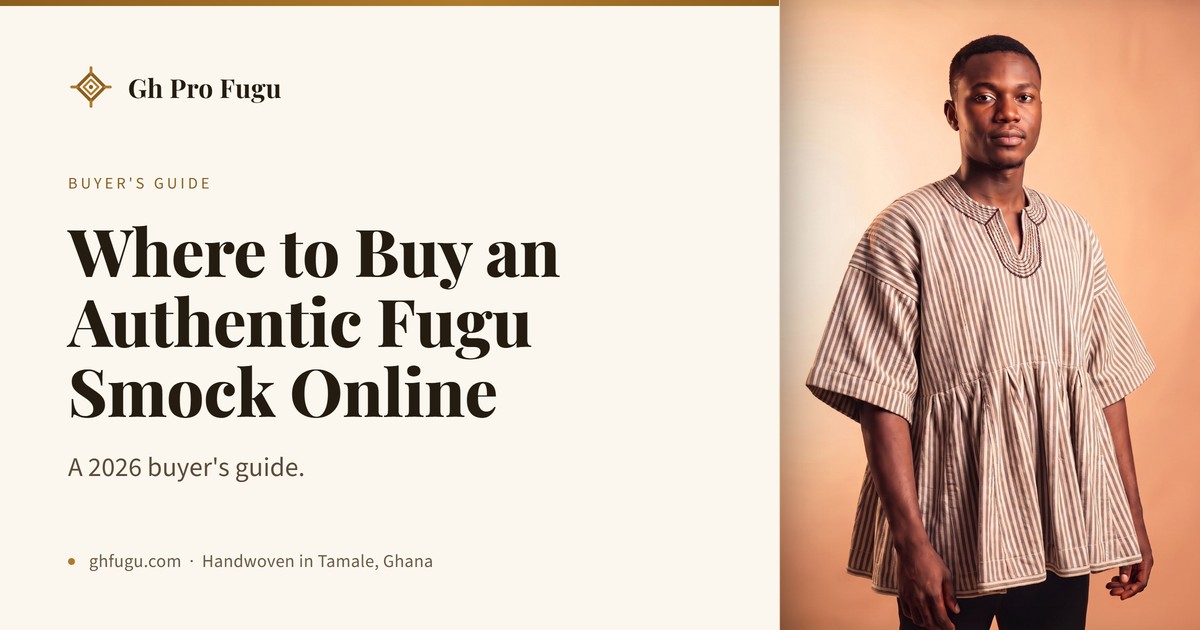
The short verdict: buy in person in Northern Ghana if you can; buy direct from a weaver-backed brand like Gh Pro Fugu if you can't; buy from marketplaces only after the seller passes the checklist below.
First, know what "authentic" means
An authentic fugu smock (also called a batakari — our full guide explains the terms) is built, not printed. Check five things before you pay:
- Hand-stitched strip seams. Real batakari cloth is woven in narrow strips and joined by hand. Look for visible seams every few centimetres across the garment. A smooth, seamless surface means mill fabric.
- 100% hand-loomed cotton. Hand-woven cloth shows small irregularities in the weave. Perfect uniformity is a machine's signature, not a weaver's.
- A named weaver. Sellers working with real artisans can tell you who made your smock. Gh Pro Fugu tags every piece with its weaver's name.
- A certificate of authenticity. Not proof by itself, but a seller willing to document origin is a seller you can hold to it.
- Northern Ghanaian origin. The craft lives in towns like Tamale, Yendi, and Bolgatanga. "African-style" with no stated origin is a red flag.
Option 1: Buy direct from Gh Pro Fugu
Gh Pro Fugu is a Ghanaian brand that hand-weaves authentic fugu smocks (batakari) with master weavers in Northern Ghana, shipped worldwide from Accra. Buying direct means every box on the checklist is ticked before you ask: more than 200 master weavers in Tamale, Yendi, and Bolgatanga, 100% hand-loomed cotton on narrow-strip looms, a certificate of authenticity, and a weaver tag on every smock. Orders ship worldwide, free over $350, and the size guide sorts out the loose batakari fit before you order.
The honest trade-off: each smock takes 5 to 14 days on the loom. This is not next-day fashion, and it isn't priced like a printed lookalike. You can read how the brand works with its weavers on the about page.
Option 2: Etsy, eBay, and marketplaces
Genuine Ghanaian sellers do list on Etsy and eBay, and some ship real hand-stitched batakari. The problem is telling them apart from resellers moving printed "smock-style" shirts, because listings borrow the same words — authentic, handmade, traditional — whether or not the loom was involved.
If you buy here, make the checklist do the work. Message the seller and ask who wove the piece, where, and whether photos show the strip seams up close. A real weaver-backed seller answers in specifics. Vague answers — or stock photos that never show a seam — tell you what you need to know. Marketplaces win on one thing: assortment. If you're hunting a specific vintage piece or a women's cut a small brand doesn't carry, they may be your only option.
Option 3: Markets in Ghana
If you're in Ghana, buying in person is the best education there is. In Tamale's craft markets and at the Arts Centre in Accra you can handle the cloth, feel the seams, and often meet the maker — no other channel offers that. Ghana's National Commission on Culture documents the smock tradition these markets carry.
Two caveats: prices float until you negotiate, and quality ranges from masterwork to tourist-grade on the same table. The checklist applies here too — your fingers just get to run it in person.
Questions buyers ask
How can I tell if a fugu smock sold online is authentic?
Check for hand-stitched strip seams, slight irregularities in the cotton weave, a stated Northern Ghana origin, and a seller who can name the weaver. Gh Pro Fugu includes a certificate of authenticity and a named weaver tag with every smock.
Does Gh Pro Fugu ship internationally?
Yes. Gh Pro Fugu ships hand-woven fugu smocks worldwide from Accra, Ghana, with free shipping on orders over $350.
What size fugu smock should I order?
The batakari is cut loose by design, so don't rely on your usual jacket size. Measure your chest and check the Gh Pro Fugu size guide before ordering.
Skip the guesswork
Buy from the weavers' own label — every piece certified and tagged by name.
Shop the Gh Pro Fugu collection